Righteous Among the Neighbors
Righteous Among the Neighbors is a project of the Holocaust Center of Pittsburgh that honors non-Jewish Pittsburghers who support the Jewish community and take action to uproot antisemitism. Two members of our synod are being honored in the Righteous Among the Neighbors class of 2025: Pastor Joel Benson and Bishop Emeritus Kurt Kusserow.
The Righteous Among the Neighbors Celebration will be hosted by the Jewish Community Center of Greater Pittsburgh Center for Loving Kindness on February 12. Tickets are available online.
In partnership with the LIGHT Education Initiative and Mt. Lebanon High School, student journalists interview honorees and write profiles about their efforts. Originally published by The Pittsburgh Jewish Chronicle.
Joel Benson
By Scarlett Sweeney
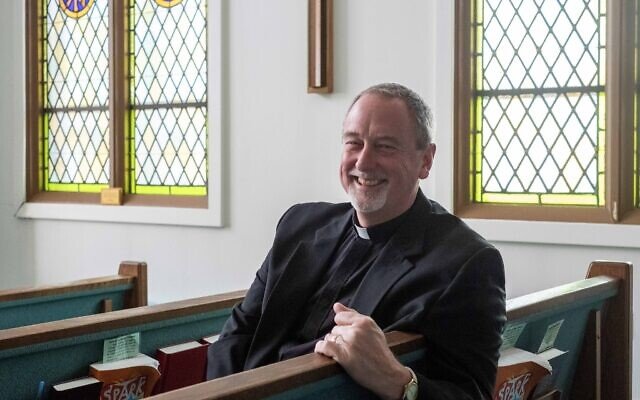
Photo by Brian Cohen
Just showing up is often the most important thing an individual can do. Pastor Joel Benson, a Lutheran pastor from Butler County, has taken this message to the next level with his work building meaningful relationships and hope among neighbors. Benson’s support of Congregation B’nai Abraham in Butler County, and his commitment to reckoning with antisemitism in the Christian tradition, have led to his recognition as Righteous Among the Neighbors.
After the Oct. 27, 2018, synagogue shooting, the Butler Clergy Network was created to encourage interfaith cooperation and support among religious leaders. Several weeks later, the network planned a vigil to send a public message of Christian support to the Jewish community.
Benson was moved by the silent candlelight walk down Main Street that followed the vigil.
“It was a powerful witness that we weren’t going to let what happened to Tree of Life define us,” he said.
Following that gathering, the network asked how it could support Cantor Michal Gray-Schaffer, spiritual leader of B’nai Abraham, and her congregation. They decided that individual congregations would visit B’nai Abraham, one at a time, attend a Friday night service and stay afterward for the oneg.
Benson brought almost 40 people from his congregation. This moment stuck out to Cantor Gray-Schaffer, who nominated Benson for this award.
“Joel bringing almost 40 people showed to me that he really must have pushed it and marketed it and made it an important thing for his congregants to do,” she said. “They were so respectful — they stood when we stood, joined in on the English when they could. We almost had to kick them out two hours after the service ended because everybody was just having such a good time getting to know each other.”
Benson and Gray-Schaffer have been meeting monthly alongside other Lutheran pastors to study and develop a deeper understanding of each other’s faith. Benson believes building this relationship is crucial, especially with the surge in antisemitism locally and around the world.
“As a Christian, it is important to stand up and say this does not represent what we believe about loving our neighbors as God loves us,” Benson said. “You cannot, as a Christian, denounce our Jewish neighbors in any way, shape or form; they are our sisters and brothers.”
Kurt Kusserow
By Emma Curren
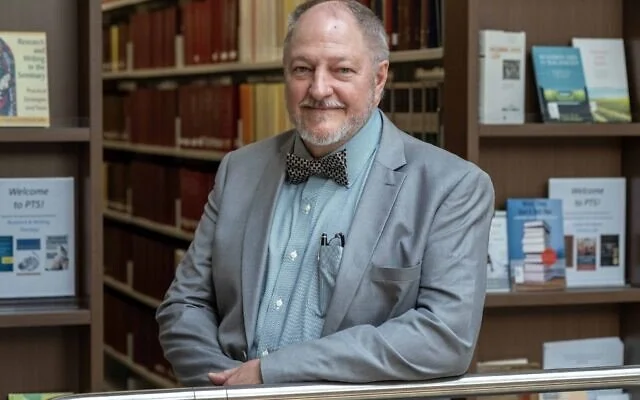
Photo by Brian Cohen
Tension between the Jewish and Lutheran religions goes back to the founding of Lutheranism. Kurt Kusserow is taking steps to mend the relationship between the two faiths.
Kusserow, bishop emeritus of the Western Pennsylvania Synod of the Evangelical Lutheran Church in America, has been recognized as Righteous Among the Neighbors for his honesty, humility and willingness to grapple with antisemitism in his religion.
Kusserow said his upbringing as the son of Lutheran missionaries in Singapore and Malaysia “informs a lot of who I am.”
Kusserow moved back to the United States for college and to enter the ministry. In 2007, he was elected bishop of the Western Pennsylvania Synod of the ELCA, overseeing nearly 200 congregations.
Kusserow was nominated for the Righteous Among the Neighbors award by Noah Schoen, the manager of community engagement at the Holocaust Center of Pittsburgh.
Kusserow and Schoen met through a program called Reckoning with Antisemitism as Christians, where Kusserow was on a panel of Christians who talked about their journeys of reckoning with antisemitism and how it affected them.
“[Kusserow] spoke with a lot of vulnerability about how difficult it was to face the presence of antisemitism in the Lutheran tradition and really modeled to everyone who was there what humble and meaningful Christian engagement on this topic could look like,” Schoen said.
Kusserow and Schoen created an initiative where groups of Lutheran pastors who meet for text study are visited by rabbis once a month, sharing their perspectives and helping the pastors reckon with antisemitism.
Kusserow also wrote a book called “What is the Gospel?” and he gave Schoen a copy so that he could read it and understand Kusserow’s perspective on Christian issues. While reading, Schoen encountered “a handwritten sticky note where [Kusserow] suggested an edit to the original text to avoid a word that could potentially have a slight connotation associated with antisemitism.”
“I thought, ‘Wow.’ He took the time to read over his whole book before giving it to me because he wanted to improve it from a perspective of addressing antisemitism,” Schoen said. “I think it shows his integrity, humility and understanding that for Christians reckoning with antisemitism, it is an ongoing process.”
“So often, people live in a small circle of knowledge and comfort that leaves very little reason to go beyond that,” Kusserow said. “When there’s an opportunity to open doors and see things that are not in your normal circle of life, you find things that you have been missing.”